- Skip to Main Content
- Screen Reader Access
- CSR
- Recruitment
- Tender
- RTI
- Notifications
- हिंदी
-
- A+
- A
- A-
- A
- A
- A
- A

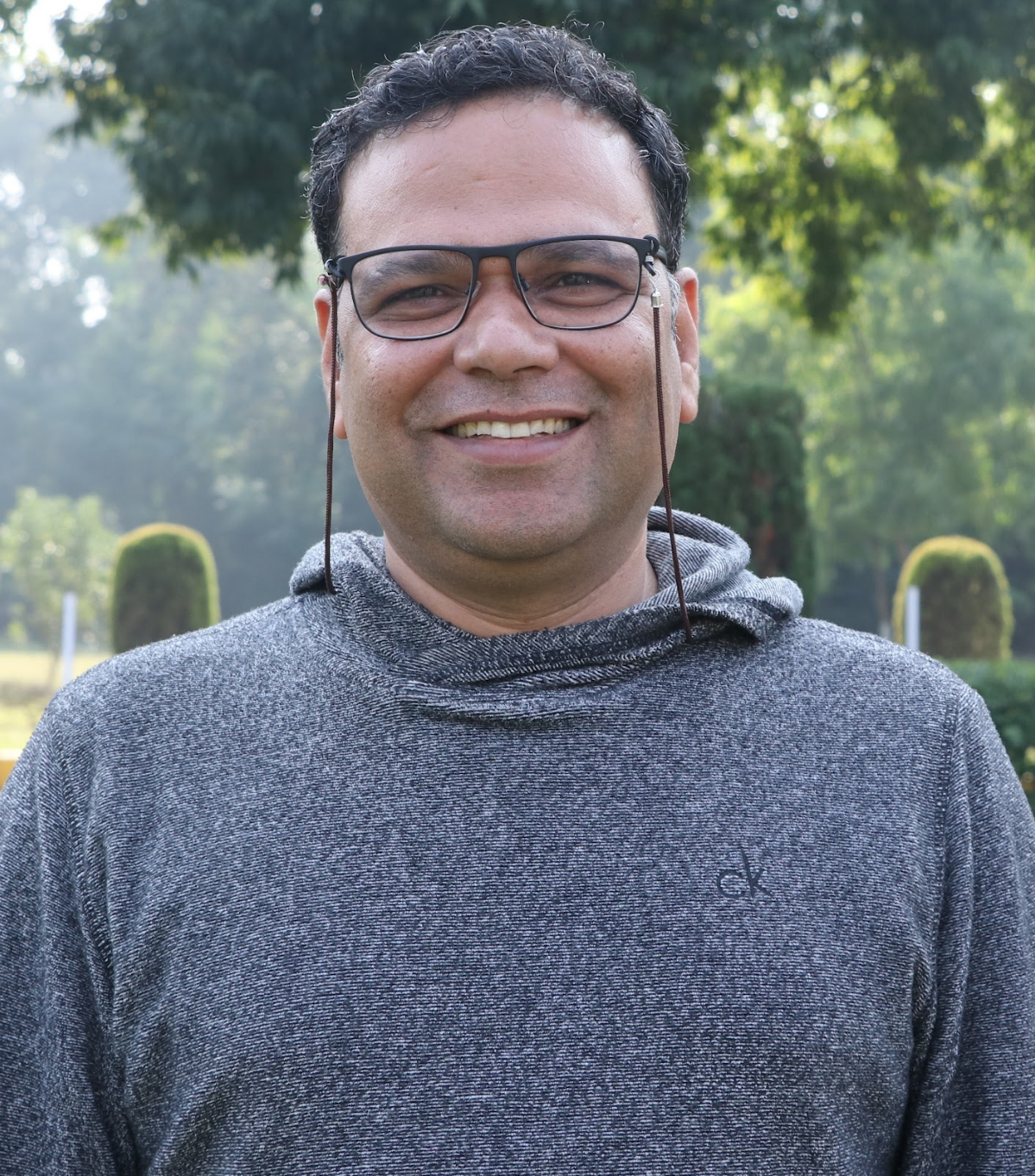
Dr. Amit Kumar
Scientist F
Dr. Amit Kumar leads the Genome & Cell Integrity Laboratory at CSIR-IMTECH, Chandigarh. He received his PhD in Molecular Biology from the Universidad Autónoma de Madrid, Spain, where he studied the nuclear functions of phosphoinositide 3-kinases in DNA replication, DNA repair and cell division. He then carried out postdoctoral research as an EMBO and Marie Curie fellow, during which he discovered that the checkpoint kinase ATR responds to mechanical stress at the nuclear envelope. Alongside his research, he serves as Scientist-in-Charge of the International Depositary Authority (IDA) at MTCC, one of India's recognised repositories for patent deposits of microorganisms under the Budapest Treaty.
Research Interests: Cells constantly experience mechanical forces: compression, stretching, and deformation as they move through tissues or encounter pathogens. Our laboratory asks how such forces are transmitted to the nucleus and how the genome, the DNA damage response machinery, and the cell cycle respond to them. Current work in the lab addresses three linked questions. First, how proteins of the DNA damage response contribute to cell cycle regulation following mechanical stimulation. Second, how acute deformation of the nucleus triggers transcriptional responses to preserve cell integrity. Third, how nuclear mechanotransduction influences the outcome of infection by the fungal pathogen Cryptococcus, an area where host cell mechanics and microbial pathogenesis meet.
Microbial Resources and Services: As Scientist-in-Charge of IDA-MTCC, Dr. Kumar oversees patent and safe deposits of microbial strains, viability testing, furnishing of samples, and advisory support to depositors on Budapest Treaty procedures.
Editorial Boards: Mutagenesis ( Oxford University Press, 2017-2023) and ecancermedicalscience(2020 - till date)
- Yadav V. et al., HSc70 interactome reveal major role of macroautophagy and minor role of chaperone mediated autophagy in K-Ras G12V cell proliferation and survival. Journal of Proteomics. 2022.
- Awasthi P. et al., Proteome profiling of phosphatidylinositol-5-phosphate 4-kinase type 2A and 2B knockdown cells identify modifications in key regulators involved in cell homeostasis and genome integrity. Genome Instability & Disease. 2022.
- Kosar M. et al., Human nucleoporin Tpr coordinates mRNA processing with chromosome replication. Nature Communication. 2021 .
- Kidiyoor GR. Et al., ATR preserves cell mechanics and prevents nuclear collapse during interstitial migration. Nature Communication. 2020.
- Kidiyoor Gret al., ATR-mediated regulation of nuclear and cellular plasticity. DNA Repair (Amst). 2016.
- Awasthi P, et al. ATM and ATR signaling at a glance. J Cell Sci. 2015.
- Kumar A, et al. ATR mediates a checkpoint at the nuclear envelope in response to mechanical stress. Cell. 2014.
- Kumar A , et al. Nuclear but not cytosolic phosphoinositide 3-kinase beta plays an essential function in cell survival. Mol Cell Biol. 2011.
- Kumar A, Fernández-Capetillo O, Carrera AC. Nuclear phosphoinositide 3-kinase beta controls double-strand break DNA repair. Proc Natl Acad Sci USA. 2010.
- Marqués M*, Kumar A*, et al. Specific function of phosphoinositide 3-kinase beta in the control of DNA replication. Proc Natl Acad Sci USA. 2009.
- Kumar A , et al. Phosphoinositide 3-kinase activation in late G1 is required for c-Myc stabilization and S phase entry. Mol Cell Biol. 2006.
Last Modified Date:- 09-10-2026