
DIRECTOR'S MESSAGE
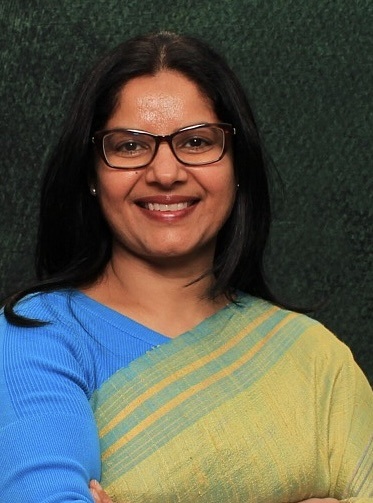
Dr. Alka Rao
For four decades now, the CSIR-Institute of Microbial Technology has held on to a single belief and proved that the world of microorganisms, invisible to the eye, holds real answers to some of our biggest problems. We started small in 1984, one of thirty-eight national laboratories set up under CSIR, working out of just ten thousand square feet. What we have built since—a forty-seven acre campus in Chandigarh, including twenty-two acres of research laboratories—is the work of scientists, students, and staff who kept showing up and kept asking questions. That is how we became one of India's leading institutions in microbial biotechnology.
With persistence and a commitment to excellence, our scientists developed recombinant, clot-specific Streptokinase—one of India's earliest home-grown biopharmaceuticals to reach patients at scale. We built the Computational Resource for Drug Discovery, which researchers around the world consult daily, remaining among the most accessed digital life-sciences resources globally. We built the Microbial Type Culture Collection (MTCC), now home to over thirteen thousand five hundred authenticated cultures—including the largest collection of sovereign type strains and specimen vouchers of microbes of Indian origin—notified by the Ministry of Environment, Forest and Climate Change (MoEFCC) as a designated repository under the Biological Diversity Act, recognized by WIPO as an International Depository Authority, and trusted by the Indian Pharmacopoeia Commission as its reference strain provider. Each of these achievements took years of quiet, careful work by people who simply would not let a hard question go unanswered.
In keeping with our institutional mandate, our work will continue to close the distance between what can be discovered in a laboratory and what can serve a patient, a farmer, or a production line. In many ways, IMTECH was among the earliest classic biofoundries in the country, integrating strain discovery, bioprocess design, and scale-up long before modern bioeconomy terminology took hold. Today, as biology evolves from a descriptive science into an engineering discipline, we embed that same Design-Build-Test-Learn ethos across our mission.
A few clear themes run through what we do today. Antimicrobial resistance and tuberculosis remain central to our mission; our scientists pursue new drug leads, investigate how resistance develops, and build faster diagnostics, supported by our BSL-3 containment and structural biology capabilities. Microbiome science takes us from extreme environments such as Himalayan hot springs to the human gut and across the breadth of India’s population diversity. In synthetic biology, we engineer indigenous host and vector systems, developing robust enzymes and engineered microbes for cleaner industrial processes—turning waste into fuel, capturing carbon dioxide, and building biomolecules that are otherwise difficult to make. Our vaccine and protein-production platforms, backed by a cGMP-compliant facility, carry this work from the bench toward the clinic or industry. At the same time, the MTCC is steadily becoming a reliable digital resource, ensuring that the biological wealth it holds is genuinely accessible to researchers and industry alike. We work closely with industrial partners who bring us real problems to solve, and we invest deeply in training the scientists who will carry this work forward.
We want to remain a place where good, patient science always wins the argument—where what gets pursued is decided by the quality of the work and the honesty of the reasoning behind it, and where every person here, from senior scientist to lab technician, knows that what they do matters, and is seen to matter.
To every researcher, student, industry partner, and regulator looking for an honest, capable scientific partner—our doors are open.
Good science, done with patience and honesty, can change history. That is what we hope to keep doing here, together.